By Dr. Marvin Spann, board-certified plastic surgeon | October 14, 2026
Breast reconstruction after mastectomy rebuilds the shape of one or both breasts using a breast implant, tissue from another part of your body, or a combination of the two. It can begin during the same surgery as your mastectomy or months or even years later. Choosing not to have reconstruction is also a valid option. For most women with health insurance that covers mastectomy, federal law requires coverage for reconstruction as well.
October is Breast Cancer Awareness Month, and Wednesday, October 21, is Breast Reconstruction Awareness (BRA) Day in the United States. Its purpose is simple: every woman facing a mastectomy should know her reconstruction options before surgery, not after. This guide from board-certified plastic surgeon Dr. Marvin Spann of Couture Dermatology & Plastic Surgery in Las Vegas walks through those options so you can have a more informed conversation with your care team.
There is no single right answer, and the decision belongs to you. Some women want reconstruction because it helps them feel more like themselves after cancer treatment. Others prefer not to have additional surgery.
If you decide against reconstruction, you still have choices. The National Cancer Institute's breast reconstruction fact sheet describes aesthetic flat closure, a procedure that removes excess skin and tissue so the chest wall looks smooth and flat. Many women also use external breast forms, which fit inside a bra. You can also decide later: delaying reconstruction does not close the door on it.
What matters most is that you hear all of your options before your mastectomy, so that your cancer surgeon and plastic surgeon can plan together.
Immediate reconstruction begins during the same operation as your mastectomy. Your breast surgeon removes the breast tissue, and your plastic surgeon starts rebuilding right away. Many women like waking up with a breast shape already in place.
Delayed reconstruction happens after your mastectomy incisions have healed and, often, after other treatments are finished. It can take place months or years later.
Radiation therapy is one of the biggest factors in timing. According to the NCI, radiation can sometimes cause wound-healing problems or infection in a reconstructed breast, so some women choose to wait. Improvements in surgical and radiation techniques mean immediate implant reconstruction is often still an option for women who will need radiation. Reconstruction with your own tissue is usually reserved for after radiation, so that healthy tissue can replace skin damaged by treatment.
Your plastic surgeon will work with your oncology team to decide what timing is safest for you.
Implant reconstruction is common and usually happens in two stages.
In some cases, an implant can be placed during the mastectomy itself, without an expander.
What to consider with implants:
Implant safety information. The FDA requires breast implant labeling to include a boxed warning and a patient decision checklist, which you should have the chance to review with your surgeon. It also recommends periodic imaging to screen for silent rupture of silicone implants. There is a small risk of breast implant-associated anaplastic large cell lymphoma (BIA-ALCL), a rare cancer of the immune system that has been linked mainly to textured implants. You can read more on the FDA's breast implant information page and in its summary of breast implant risks and complications.
Autologous, or "flap," reconstruction uses skin, fat, and sometimes muscle from another part of your body to create a new breast. Tissue most often comes from the lower abdomen or the back, and sometimes from the thigh or buttocks.
There are two main types of flaps:
What to consider with flaps:
Sometimes an implant and your own tissue are used together, for example when there isn't enough tissue to create the size you want, or when extra tissue is needed to cover an implant.
Dr. Marvin Spann will explain which approaches fit your body, your cancer treatment plan, and your goals.

Some women are candidates for a nipple-sparing mastectomy, which preserves the nipple and areola. This depends on the size and location of the cancer and the shape of the breast, and it is a decision your breast surgeon makes.
When the nipple and areola are removed, they can be recreated as a final step, once the reconstructed breast has settled into position. Options include:
Some women choose to skip this step entirely, and that is a personal choice as well.
If only one breast is removed, your reconstructed breast may look different from your natural breast, especially as your body changes over time. A lift, reduction, or augmentation on the other breast can help the two match more closely. For women whose insurance falls under federal reconstruction law, surgery on the other breast to achieve symmetry is included in required coverage.
Every type of breast reconstruction is real surgery, and recovery takes time. A few things are true for almost everyone:
Your plastic surgeon will give you a recovery plan specific to your procedure, including activity limits, drain care if drains are used, and when to return to work.
The Women's Health and Cancer Rights Act of 1998, explained here by the Centers for Medicare & Medicaid Services, is a federal law that protects women who choose reconstruction after mastectomy. If the law applies to your plan and you are receiving mastectomy benefits, coverage must include:
Some plans are exempt, and the law does not apply to Medicare or Medicaid, which have their own rules. Coverage details vary by plan. Couture's billing team can help you understand your benefits before you schedule surgery.
Reconstruction does not replace follow-up care. The NCI notes that mammograms are not typically done on a breast that has been reconstructed after mastectomy; instead, your doctors monitor it with physical exams. If you still have one natural breast, you will continue to have mammograms on that side. Keep every follow-up appointment with both your oncology team and your plastic surgeon.
A consultation with a board-certified plastic surgeon is where your options become specific to you. At Couture, it helps to bring:
Questions worth asking:
If you are traveling to Las Vegas for part of your care, Couture's office and travel information can help you plan around appointments and follow-up visits.
Learning about reconstruction before your mastectomy gives you the most choices, but it is never too late to explore your options. Whether you are newly diagnosed, finishing treatment, or years past your mastectomy, a consultation can help you understand what is possible.
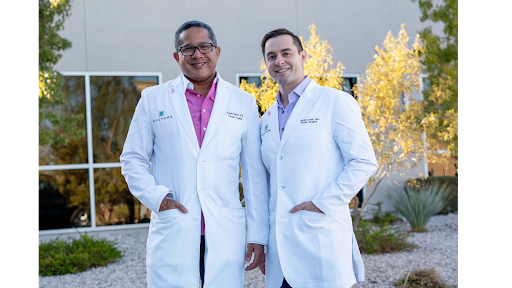
At Couture Dermatology & Plastic Surgery, reconstruction consultations are available with board-certified plastic surgeon Dr. Marvin Spann and with plastic surgeon Dr. Mitchell Lyons. Schedule a breast reconstruction consultation, read more about breast reconstruction at Couture, or explore all of our breast surgery options. For additional reading, the American Society of Plastic Surgeons offers a helpful patient guide to breast reconstruction.
Can I have breast reconstruction years after my mastectomy? Yes. Delayed reconstruction can be done months or years after a mastectomy, once you have healed and finished treatment.
Is implant or flap reconstruction better? Neither is better for everyone. Implants involve a shorter surgery and often a shorter initial recovery. Flaps use your own tissue and can feel more natural, but require a longer surgery and leave a second scar. The right choice depends on your body, your cancer treatment, and your preferences.
Does insurance pay for breast reconstruction? For many women, yes. The Women's Health and Cancer Rights Act requires most group health plans and insurers that cover mastectomy to also cover reconstruction, including surgery on the other breast for symmetry. Some plans are exempt, so check your specific benefits.
Will I have feeling in my reconstructed breast? Some loss of sensation is expected after any mastectomy. Some feeling may return over time, and results vary from person to person.
Dr. Marvin Spann is a plastic surgeon certified by the American Board of Plastic Surgery, specializing in cosmetic and reconstructive surgery of the face, breast, and body. After undergraduate studies at UCLA, where he conducted neurobiology research, he earned his medical degree at Meharry Medical College in 2000. He completed his general surgery residency at New York Hospital Queens, including a two-year plastic surgery research fellowship at New York Presbyterian-Weill Cornell, followed by plastic surgery residency at the University of Utah, graduating in 2009. He has published research in medical and surgical journals and presented at national plastic surgery conferences. In 2012, he co-founded Couture Dermatology & Plastic Surgery in Las Vegas with his wife, board-certified dermatologist Dr. Candace Thornton Spann. His patients know him for thorough consultations, honest evaluations, and straightforward recommendations.
Read Dr. Marvin Spann's full bio
This article is for general education and is not medical advice. Results vary, and every procedure carries risks. A consultation with a board-certified plastic surgeon is the best way to learn which options are right for you.