By Dr. Candace Thornton Spann, board-certified dermatologist | October 7, 2026
Female pattern hair loss is the most common cause of hair loss in women, and it is treatable. It usually shows up as a widening part or a thinner ponytail rather than bald spots, and treatment works best when it starts at the first signs. Because several other conditions can look almost identical, the most important step is getting the right diagnosis from a dermatologist.
Women's hair loss is one of the main areas of focus for board-certified dermatologist Dr. Candace Thornton Spann at Couture Dermatology & Plastic Surgery in Las Vegas. It is also personal for her: she has experienced hair loss herself, so she understands how much it can affect the way you feel about yourself.
Female pattern hair loss (FPHL), also called androgenetic alopecia, is a gradual thinning of the hair on top of the head. Over time, affected hair follicles shrink and produce finer, shorter hairs, so the hair looks less dense even though you may not be losing clumps. It is a non-scarring condition, which means the follicles are not destroyed.
Unlike the receding hairline many men experience, women with FPHL usually keep their front hairline. The thinning is concentrated along the part and at the crown, a pattern described in this clinical review of female pattern hair loss published in the National Library of Medicine.
According to the American Academy of Dermatology's overview of female pattern hair loss, FPHL most often begins when a woman is in her 40s, 50s, or 60s, although it can start earlier. It is progressive, so thinning tends to continue without treatment. Most women do not lose all of their hair, but some eventually develop widespread thinning.
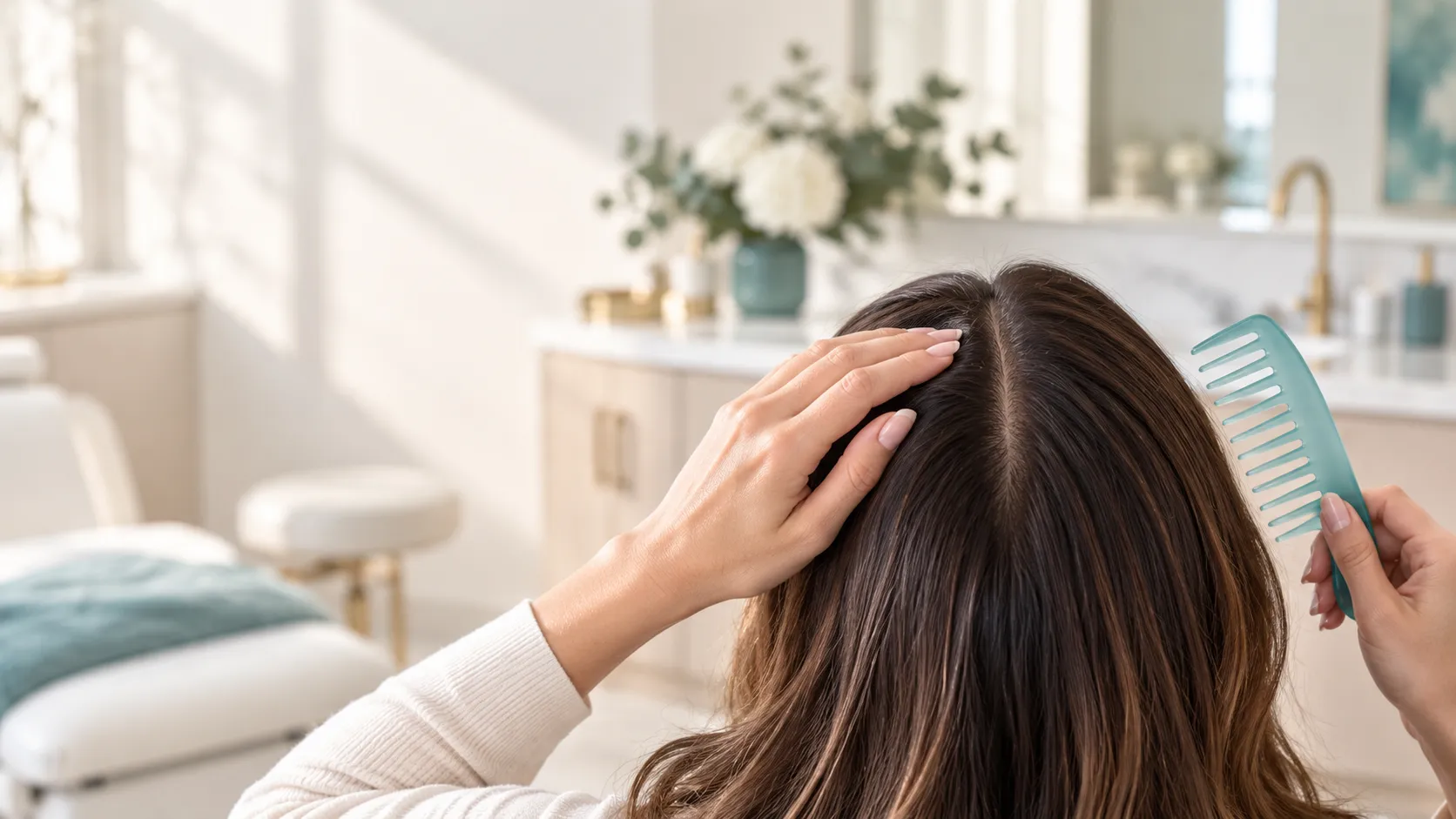
The changes happen slowly, which is why many women have thinning for months or even years before they notice it. The AAD's guide to early signs of hair loss notes that for women, the first sign is often a widening part or a ponytail that feels less full. Other signs include:
More scalp showing on top of the head or at the crown, especially under bright light or in photos
A part that looks wider than it did a year or two ago
Hair near the temples that seems to be thinning or receding slightly
Shorter, finer hairs along the part line
Needing fewer wraps of a hair tie to secure a ponytail
Some changes point to a different problem and are a reason to be seen sooner: a bald patch that appears within a day or two, hair coming out in clumps, or a scalp that is itchy, burning, painful, red, or scaly.
FPHL is hereditary. You can inherit the genes from your mother, your father, or both, which is why a family history of thinning hair on either side matters. The National Library of Medicine's MedlinePlus Genetics page on androgenetic alopecia explains that the condition tends to run in families. Because FPHL is more common after menopause, hormones may also play a role.
Many women with FPHL have normal hormone levels. When thinning comes with other signs of excess androgens, such as persistent acne, irregular periods, or new facial hair, a dermatologist may look for an underlying condition such as polycystic ovary syndrome. Life events that trigger heavy shedding, including childbirth, illness, significant weight loss, and major stress, can also make FPHL more noticeable.
Several types of hair loss look like FPHL at first glance, and each is treated differently. This is a big reason why products marketed for "thinning hair" often disappoint: they are not matched to the actual cause.
Excessive shedding (telogen effluvium). Losing 50 to 100 hairs a day is normal, according to the AAD's explanation of hair shedding versus hair loss. Heavier shedding often starts a few months after a stressor such as childbirth, surgery, a high fever, or losing a lot of weight, and it frequently settles on its own. It can also happen at the same time as FPHL.
Central centrifugal cicatricial alopecia (CCCA). This scarring form of hair loss often begins at the top of the head, the same area FPHL affects. It is most common in Black women, as the AAD's guide to hair loss in Black women describes. Early treatment matters because scarring can permanently damage follicles.
Traction alopecia. Tight hairstyles, braids, extensions, and weaves that pull on the hair over time can cause thinning, often along the hairline.
Alopecia areata. An immune-related condition that usually causes smooth, round patches of hair loss.
Medical causes. Thyroid problems, low iron, and some medications can all contribute to thinning.
Some women have more than one of these at once. Sorting that out is the job of a dermatologist, and it shapes every treatment decision that follows.
At Couture, Dr. Candace Thornton Spann starts by identifying what is causing your hair loss before recommending treatment. An evaluation typically includes:
A detailed history. When you first noticed changes, family history, recent illness, pregnancy or menopause, weight changes, stress, medications, supplements, and how you style and care for your hair.
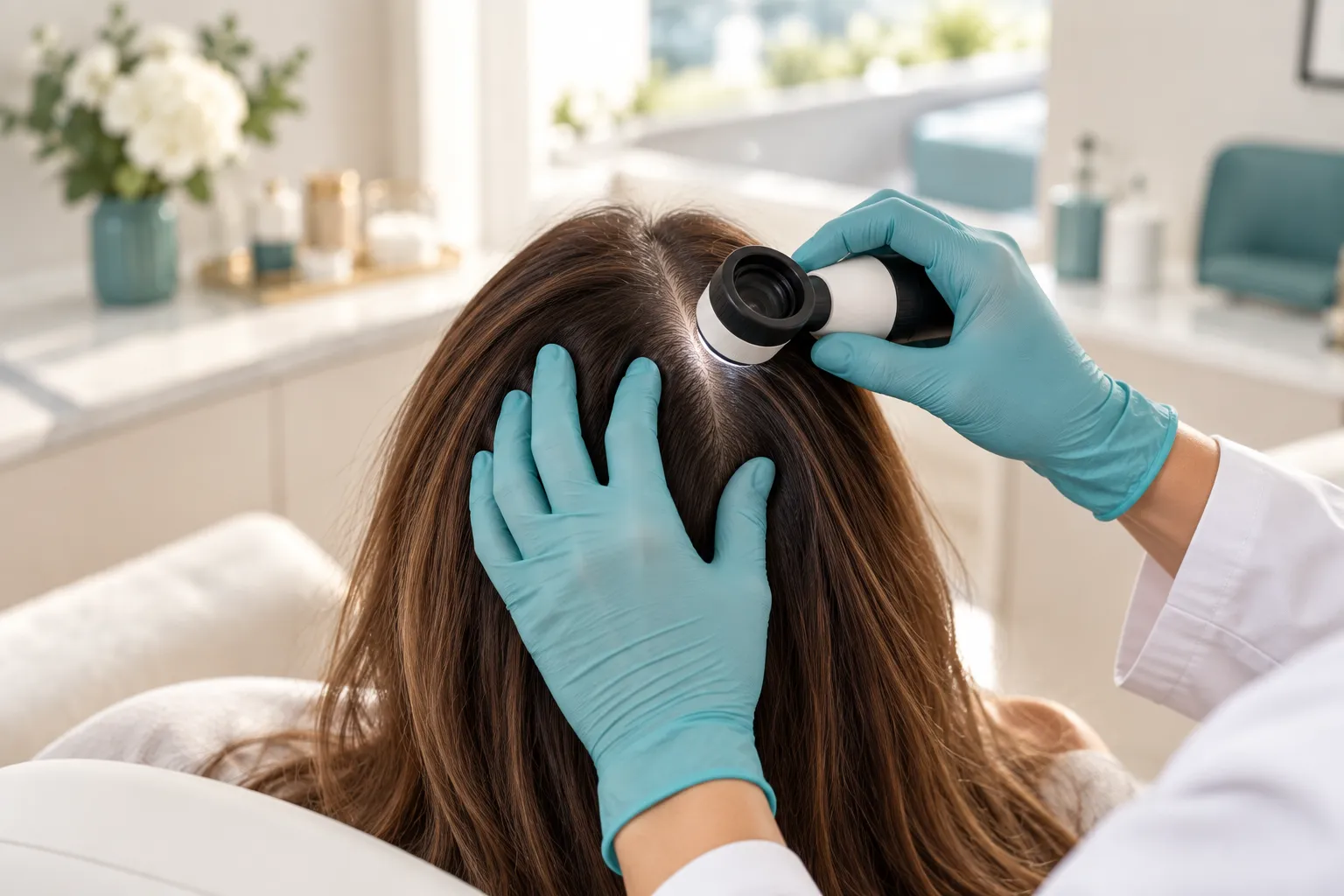
A scalp and hair exam. This often includes looking at the scalp and hair shafts under magnification and gently testing how easily hairs come out.
Blood work when it's warranted. Depending on your history, this may check thyroid function, iron levels, or hormones.
A scalp biopsy in some cases. A small sample may be recommended when the diagnosis is unclear or a scarring condition is suspected.
To get the most out of your visit, bring a list of every medication and supplement you take, and a few photos of your hair from several years ago. Photos make gradual changes much easier to see.
There is no single treatment that works for everyone. The AAD notes that dermatologists often combine more than one approach to get the best results, and Dr. Candace Spann's treatment plans typically do the same. Options may include:
Topical medication. A non-prescription topical treatment is FDA-approved for female pattern hair loss and is the most commonly recommended starting point. Some women notice a temporary increase in shedding during the first several weeks, and some experience scalp irritation.
Prescription oral medications. Several prescription pills approved for other conditions are commonly prescribed for FPHL. They are not safe during pregnancy, and women who could become pregnant generally need reliable birth control while taking them.
Low-level laser therapy (LLLT). Light-based devices, including some FDA-cleared options for home use, may help stimulate hair growth. The AAD notes that a few studies support their use for FPHL, while long-term data are still limited.
Scalp care. A consistent scalp regimen can support healthier hair. Couture also offers AquaFirmeXS treatment for the scalp, which cleanses, exfoliates, and hydrates.
Supplements based on your needs. Dr. Candace Spann may recommend vitamins or supplements depending on your history and lab results. If you take biotin, tell your doctor before any blood test. The FDA has warned that biotin can interfere with certain lab tests and cause inaccurate results.
ReTress. Dr. Candace Thornton Spann developed ReTress, a hair care line for women with thinning hair. Because she created it, she has a financial interest in the product. Ask her during your visit whether it fits your treatment plan.
Gentle styling and camouflage. Avoiding tight styles and heat damage, choosing a cut that adds volume, and using hair fibers or tinted scalp products can make thinning less visible while treatment takes effect.
The right combination depends on your diagnosis, your health history, and whether you are pregnant, breastfeeding, or planning a pregnancy. You can read more about the approach on Couture's female hair loss treatment page.
Hair grows slowly, so patience is part of the plan. The AAD notes that it typically takes 6 to 12 months of consistent use to know how well a medication is working for you. The first goal of treatment is to stop the thinning from getting worse. Regrowth varies from person to person.
Treatment also needs to continue to keep its benefits. When women stop using FPHL medications, the hair that was gained is usually lost again over the following months. Follow-up visits give Dr. Candace Spann the chance to measure progress and adjust your plan.
A peer-reviewed review of female pattern hair loss treatment found that when available treatments are used correctly, they can stop the progression of mild to moderate FPHL in most patients. That is a strong reason not to wait.
Many hair loss treatments are not safe during pregnancy or breastfeeding, so always tell your dermatologist if you are pregnant, nursing, or planning to be.
Hair shedding after childbirth is common and usually temporary. The AAD notes it often peaks about four months after giving birth, and hair tends to regain its normal fullness within 6 to 9 months. If the shedding does not settle, or your part keeps widening after that window, it is worth being evaluated for FPHL, which can become noticeable during this time.
Thinning hair leaves more of your scalp exposed, and in Las Vegas that means more sun on skin that used to be covered. Wear a hat outdoors, apply sunscreen along your part line, and make sure your scalp is included when you have a skin cancer screening. A dermatologist can check areas you can't easily see yourself.
If your part is widening, your ponytail feels thinner, or you're seeing more scalp than you used to, an appointment with a dermatologist is the best next step. The sooner the cause is identified, the more options you are likely to have.
Schedule an appointment with Dr. Candace Thornton Spann at Couture Dermatology & Plastic Surgery in Las Vegas. You can also learn more about the causes of hair loss in women and the treatments available at Couture, or explore all of our dermatology services.
Can female pattern hair loss be reversed? Treatment can stop hair loss from getting worse for many women, and many also regrow some hair. Results vary, and treatment tends to work best when it begins at the first signs of thinning.
Is female pattern hair loss genetic? Yes. FPHL is hereditary, and the genes can come from either parent. Hormonal changes, especially after menopause, may also play a role.
How can I tell shedding from hair loss? Shedding means more hairs are falling out than usual, often after a stressful event, and it usually improves on its own. Hair loss means hair is not growing back as it should, as in FPHL. Because the two can happen together, a dermatologist's exam is the most reliable way to tell.
When should I see a dermatologist about thinning hair? As soon as you notice a change. See a dermatologist promptly if hair loss is sudden, patchy, or comes with itching, pain, redness, or scaling.
Dr. Candace Thornton Spann is a board-certified dermatologist, a diplomate of the American Board of Dermatology, and a fellow of the American Academy of Dermatology. She earned her Bachelor of Science degree at UCLA and her medical degree at Meharry Medical College, then completed her internship and dermatology residency at St. Luke's-Roosevelt Hospital Center in New York City, a Columbia University program. A Las Vegas native, she returned home to practice in 2009, and in 2012 she co-founded Couture Dermatology & Plastic Surgery with her husband, board-certified plastic surgeon Dr. Marvin Spann. Her areas of focus include women's hair loss, skin cancer prevention and treatment, and caring for patients of all ages and skin types.
Read Dr. Candace Thornton Spann's full bio
This article is for general education and is not medical advice. Results vary, and every treatment carries risks. An appointment with a board-certified dermatologist is the best way to learn which options are right for you.